
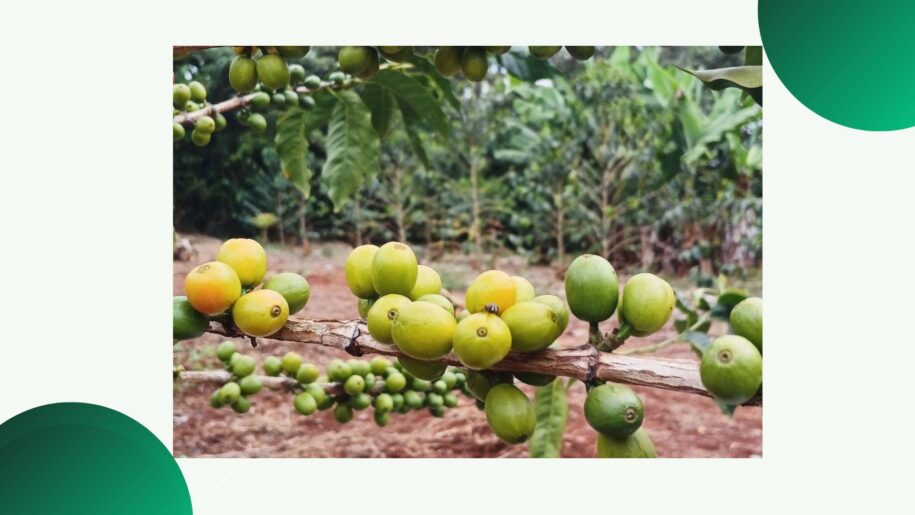
As Kenya moves through one of its most important agricultural periods, the March–April–May (MAM) long rains are now firmly underway. For coffee producers and buyers alike, this season plays a critical role in shaping both yield potential and cup quality for the year.
This April 2026 update provides a clear look at current conditions across key coffee regions, what to expect in the coming weeks, and how the fly crop (April–July) is likely to perform.
Current Weather Conditions Across Coffee Regions
Kenya is currently at the peak of the long rains season, a vital phase for cherry development, bean formation, and early harvest dynamics.
Key Observations
- Rainfall: Near-average across most coffee-growing regions
- Rain Pattern: Slight delay in early April, followed by stronger and more consistent rains toward late April
- Temperature: Cooler than average, supporting slow cherry maturation and improved cup development
Regional Breakdown
- Central Kenya (Nyeri, Kirinyaga, Murang’a, Kiambu):
Rainfall has stabilized, and soil moisture is steadily improving. These conditions support healthy cherry development and consistent crop progress. - Western Kenya (Kisii, Nyanza):
Consistent rainfall is providing strong support for tree health and overall crop performance. - Eastern Slopes (Embu, Meru):
Rainfall has been mixed at times but remains generally near normal, maintaining stable growing conditions.
Short-Term Weather Outlook (Next 2–4 Weeks)
Weather conditions are expected to shift more decisively into a favorable pattern over the coming weeks.
- Rainfall: Likely to increase toward late April, with more frequent storms across the country
- Soil Moisture: Continuing to improve, particularly in high-altitude coffee zones
- Overall Trend: Transitioning from uneven early-season conditions to more supportive growing conditions
For producers, this means better support for bean filling and cherry development. For buyers, it signals improving prospects for quality consistency.
Fly Crop Outlook (April–July 2026)
The fly crop is currently underway. While typically smaller than the main harvest, it remains an important and often quality-sensitive window for the market.
2026 Expectations
- Volume: Stable to slightly improved compared to the previous fly crop
- Early Season Impact:
Early April dryness may have caused uneven cherry development in some areas - Late April Recovery:
Increased rainfall should support bean filling, sizing, and improved uniformity
Quality Outlook
The combination of cooler highland temperatures and improving moisture levels is creating favorable conditions for:
- Good bean density
- Improved cup clarity and structure
Key Risks to Monitor
Despite the improving outlook, several risks remain:
- Cherry Drop: Early-season moisture stress in some regions
- Fungal Diseases: Rising humidity increases the risk of
- Coffee Berry Disease (CBD)
- Leaf Rust
- Harvest Disruptions: Heavy rains could impact picking, drying, and logistics.
- What This Means for Buyers & Roasters
For those planning 2026 inventory or forward contracts, Kenya’s current trajectory suggests:
- A more stable fly crop than initially expected
- Quality upside potential, particularly from high-altitude regions
- Continued need to monitor weather-driven variability through May
Final Take
Kenya’s 2026 coffee season is moving in a positive direction, with late April rains helping correct early inconsistencies. While some risks remain, the combination of cool temperatures and improving moisture provides a solid foundation for both yield stability and quality potential.
For buyers and roasters, this is a season to watch closely one that may offer both reliable supply and strong cup profiles from Kenya’s key growing regions.
If helpful, happy to discuss further on what’s coming out of Kenya this season. reach out below https://agnimble.com/request
- Kenya Coffee Crop and harvest Outlook for 2026 - April 17, 2026
- Kenya Coffee Market Outlook for the Main Crop 2025 to 2026 - December 1, 2025
- Uganda Coffee Market Trends For The 1st Quarter of 2025 - May 15, 2025